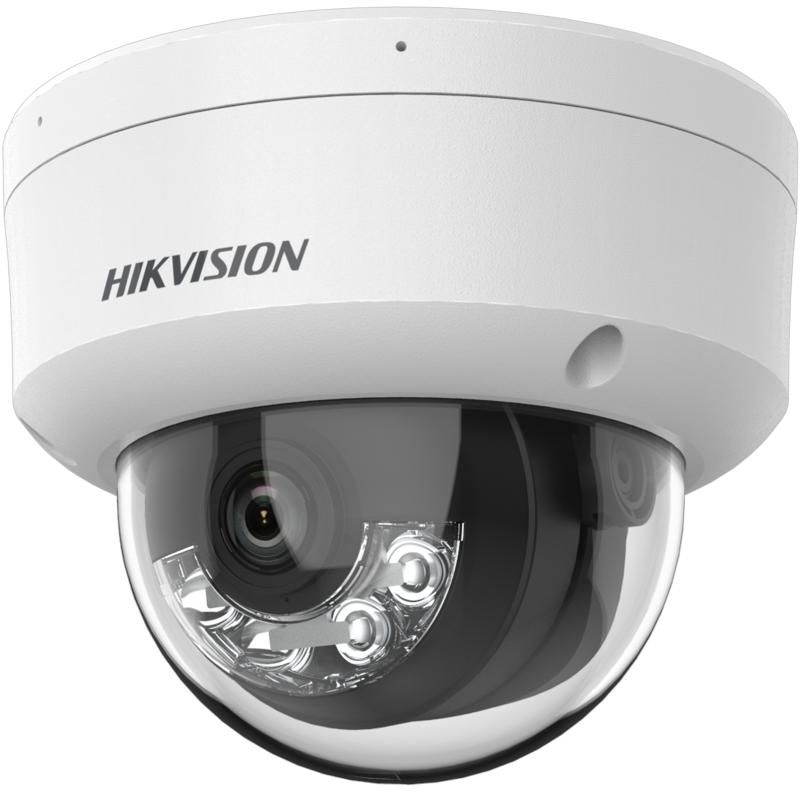
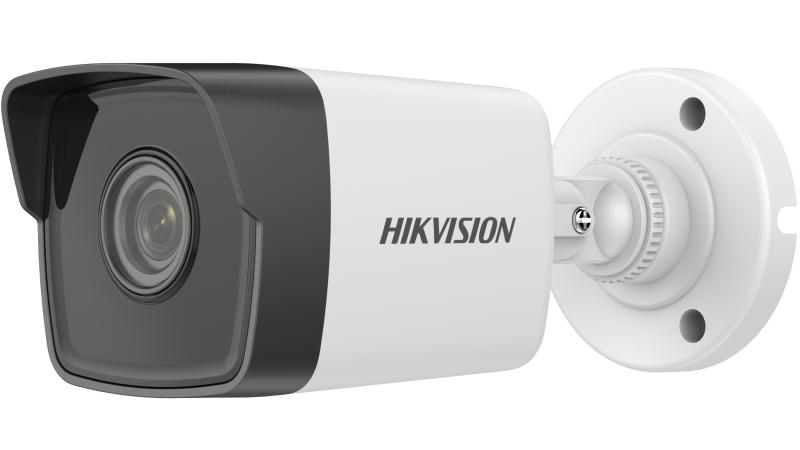
Hikvision DS-2CD1083G2-LIU
8 MP Smart Hybrid Light Fixed Bullet Network Camera


Hikvision ColorVu Review – Ratings and Features Guide (2023) Are you tired of blurry and washed-out surveillance footage? Do you want to be able to identify intruders or suspicious activity? Have you been searching for tech solutions that can capture a clear image in low-light environments? As someone who values security and safety, I understand the importance of having reliable surveillance systems in place. That’s why I have scurried the security system market for the best Singapore security system. And truth to be told, the Hikvision ColorVu product line really caught my attention. It is a high-tech camera that promises to deliver stunningly clear color images even in extremely dark scenarios. In this article, I’ll be sharing my honest review of the Hikvision ColorVu. This Hikvision ColorVu review will provide you with valuable insights into how ColorVu technology can help you solve your surveillance problem. Let’s dive into this exciting and game-changing technology that will revolutionize your surveillance system! What is Hikvision ColorVu Technology? Have you ever seen security footage that’s so dark and grainy you can hardly make out anything in the frame? Traditional security cameras often face this challenge. They struggle to produce clear images in low-light environments. Even shadows, grain, and noise can obscure the details that are so crucial to identifying people and objects in the footage. It doesn’t matter if you are a business owner who wants to protect your assets. Or if you want to keep intruders at bay from your home, you will want all the colorful details from your surveillance system that can help you do this. One important question that will guide the security system you choose to install is, does CCTV work in the dark? With Hikvision Singapore ColorVu technology, these challenges are a thing of the past. The ColorVu technology captures high-quality color video images in dimly-lit environments. ColorVu technology uses advanced sensors and lenses to capture vivid, full-color images even in poor lighting conditions. This full-color image in low-light conditions can be gotten from products like the Hikvision ColorVu dome camera and the Hikvision ColorVu bullet camera. It’s like flipping on a light switch in the dead of night. Suddenly, the previously invisible world is illuminated in stunning detail. Imagine a dimly lit parking lot, with only the faintest glimmer of moonlight filtering through the clouds. With most conventional security cameras, this scene might be almost entirely black, with only vague shapes and shadows visible. With ColorVu technology, the same scene would be a riot of color and detail. You would be able to make out the sleek lines of a car, the vivid hues of a person’s clothing, and even the sharp edges of a distant building. How Does ColorVu Technology Work? The ColorVu technology works by using a combination of high-performance lenses, sensors, and advanced algorithms to capture and process images in low-light environments. The lenses are designed to capture as much light as possible, while the sensors are optimized to pick up even the faintest traces of color. The algorithms then work to enhance and clarify the image, producing a final result that’s almost like looking at the scene in daylight. This makes them ideal for a wide range of security applications. Categorically, the ColorVu technology is successful in capturing scenes in low-light situations based on the following leeway they have made: Cutting-Edge Hardware ColorVu technology uses a range of cutting-edge hardware components to capture high-quality color video footage in low-light environments. One of the key hardware technologies is the lens, made to capture as much light as possible. ColorVu lenses have a wider aperture than conventional lenses. This is because they have an F1.0 aperture. The size of this aperture makes it possible to allow as much as 4 times more light to enter the camera. This means that even in low-light environments, the camera can capture more details and produce a clearer image. Another specific breakthrough hardware component is the sensor. ColorVu cameras utilize sensors that are highly sensitive to light, which allows them to pick up even the faintest traces of color. These sensors are designed to capture more light than traditional sensors, which means that even in low lighting environments, the camera can capture vivid, full-color images. Super-High Reliability The ColorVu CCTV camera is built to be highly reliable, even in challenging environments. The cameras are made to withstand extreme temperatures, humidity, and other environmental factors. This makes them ideal for outdoor environments where lighting is limited. A typical example is the turret camera Hikvision 5MP ColorVu. In addition to their rugged construction, ColorVu cameras also feature advanced alignment technology that enhances their reliability. For example, the cameras are equipped with advanced image stabilization technology to ensure that the footage captured is steady and clear, even in windy or unstable conditions. This quality boosts the focusing performance of the mass-produced ultra HD ColorVU cameras as a result, the camera footage is easier to analyze and interpret. This is crucial in identifying potential threats. State-of-the-Art Image Processing ColorVu cameras employ state-of-the-art image processing techniques to enhance the image quality of the footage captured. This includes the pioneering Image Signal Processing (ISP) technology. The cameras use advanced algorithms that analyze the image data and apply a range of enhancements. When light enters the camera’s lens, it is converted into an electrical signal by the camera’s sensor. This raw data is then processed by the ISP chip, which applies a range of enhancements to the image. These enhancements can include noise reduction, color correction, sharpening, and contrast adjustment, among others. In addition, ColorVu cameras feature advanced lenses that guarantee high-quality images in various lighting conditions. Their dynamic range can reach up to 130dB. This means that the cameras can capture details in both bright and dark areas of the scene. Why Choose ColorVu Technology? ColorVu technology is a highly advanced solution that offers lots of benefits for security and surveillance applications.
Hikvision ColorVu Review – Ratings and Features Guide (2023) Are you tired of blurry and washed-out surveillance footage? Do you want to be able to identify intruders or suspicious activity? Have you been searching for tech solutions that can capture a clear image in low-light environments? As someone who values security and safety, I understand the importance of having reliable surveillance systems in place. That’s why I have scurried the security system market for the best Singapore security system. And truth to be told, the Hikvision ColorVu product line really caught my attention. It is a high-tech camera that promises to deliver stunningly clear color images even in extremely dark scenarios. In this article, I’ll be sharing my honest review of the Hikvision ColorVu. This Hikvision ColorVu review will provide you with valuable insights into how ColorVu technology can help you solve your surveillance problem. Let’s dive into this exciting and game-changing technology that will revolutionize your surveillance system! What is Hikvision ColorVu Technology? Have you ever seen security footage that’s so dark and grainy you can hardly make out anything in the frame? Traditional security cameras often face this challenge. They struggle to produce clear images in low-light environments. Even shadows, grain, and noise can obscure the details that are so crucial to identifying people and objects in the footage. It doesn’t matter if you are a business owner who wants to protect your assets. Or if you want to keep intruders at bay from your home, you will want all the colorful details from your surveillance system that can help you do this. One important question that will guide the security system you choose to install is, does CCTV work in the dark? With Hikvision Singapore ColorVu technology, these challenges are a thing of the past. The ColorVu technology captures high-quality color video images in dimly-lit environments. ColorVu technology uses advanced sensors and lenses to capture vivid, full-color images even in poor lighting conditions. This full-color image in low-light conditions can be gotten from products like the Hikvision ColorVu dome camera and the Hikvision ColorVu bullet camera. It’s like flipping on a light switch in the dead of night. Suddenly, the previously invisible world is illuminated in stunning detail. Imagine a dimly lit parking lot, with only the faintest glimmer of moonlight filtering through the clouds. With most conventional security cameras, this scene might be almost entirely black, with only vague shapes and shadows visible. With ColorVu technology, the same scene would be a riot of color and detail. You would be able to make out the sleek lines of a car, the vivid hues of a person’s clothing, and even the sharp edges of a distant building. How Does ColorVu Technology Work? The ColorVu technology works by using a combination of high-performance lenses, sensors, and advanced algorithms to capture and process images in low-light environments. The lenses are designed to capture as much light as possible, while the sensors are optimized to pick up even the faintest traces of color. The algorithms then work to enhance and clarify the image, producing a final result that’s almost like looking at the scene in daylight. This makes them ideal for a wide range of security applications. Categorically, the ColorVu technology is successful in capturing scenes in low-light situations based on the following leeway they have made: Cutting-Edge Hardware ColorVu technology uses a range of cutting-edge hardware components to capture high-quality color video footage in low-light environments. One of the key hardware technologies is the lens, made to capture as much light as possible. ColorVu lenses have a wider aperture than conventional lenses. This is because they have an F1.0 aperture. The size of this aperture makes it possible to allow as much as 4 times more light to enter the camera. This means that even in low-light environments, the camera can capture more details and produce a clearer image. Another specific breakthrough hardware component is the sensor. ColorVu cameras utilize sensors that are highly sensitive to light, which allows them to pick up even the faintest traces of color. These sensors are designed to capture more light than traditional sensors, which means that even in low lighting environments, the camera can capture vivid, full-color images. Super-High Reliability The ColorVu CCTV camera is built to be highly reliable, even in challenging environments. The cameras are made to withstand extreme temperatures, humidity, and other environmental factors. This makes them ideal for outdoor environments where lighting is limited. A typical example is the turret camera Hikvision 5MP ColorVu. In addition to their rugged construction, ColorVu cameras also feature advanced alignment technology that enhances their reliability. For example, the cameras are equipped with advanced image stabilization technology to ensure that the footage captured is steady and clear, even in windy or unstable conditions. This quality boosts the focusing performance of the mass-produced ultra HD ColorVU cameras as a result, the camera footage is easier to analyze and interpret. This is crucial in identifying potential threats. State-of-the-Art Image Processing ColorVu cameras employ state-of-the-art image processing techniques to enhance the image quality of the footage captured. This includes the pioneering Image Signal Processing (ISP) technology. The cameras use advanced algorithms that analyze the image data and apply a range of enhancements. When light enters the camera’s lens, it is converted into an electrical signal by the camera’s sensor. This raw data is then processed by the ISP chip, which applies a range of enhancements to the image. These enhancements can include noise reduction, color correction, sharpening, and contrast adjustment, among others. In addition, ColorVu cameras feature advanced lenses that guarantee high-quality images in various lighting conditions. Their dynamic range can reach up to 130dB. This means that the cameras can capture details in both bright and dark areas of the scene. Why Choose ColorVu Technology? ColorVu technology is a highly advanced solution that offers lots of benefits for security and surveillance applications.
Hikvision ColorVu Review – Ratings and Features Guide (2023) Are you tired of blurry and washed-out surveillance footage? Do you want to be able to identify intruders or suspicious activity? Have you been searching for tech solutions that can capture a clear image in low-light environments? As someone who values security and safety, I understand the importance of having reliable surveillance systems in place. That’s why I have scurried the security system market for the best Singapore security system. And truth to be told, the Hikvision ColorVu product line really caught my attention. It is a high-tech camera that promises to deliver stunningly clear color images even in extremely dark scenarios. In this article, I’ll be sharing my honest review of the Hikvision ColorVu. This Hikvision ColorVu review will provide you with valuable insights into how ColorVu technology can help you solve your surveillance problem. Let’s dive into this exciting and game-changing technology that will revolutionize your surveillance system! What is Hikvision ColorVu Technology? Have you ever seen security footage that’s so dark and grainy you can hardly make out anything in the frame? Traditional security cameras often face this challenge. They struggle to produce clear images in low-light environments. Even shadows, grain, and noise can obscure the details that are so crucial to identifying people and objects in the footage. It doesn’t matter if you are a business owner who wants to protect your assets. Or if you want to keep intruders at bay from your home, you will want all the colorful details from your surveillance system that can help you do this. One important question that will guide the security system you choose to install is, does CCTV work in the dark? With Hikvision Singapore ColorVu technology, these challenges are a thing of the past. The ColorVu technology captures high-quality color video images in dimly-lit environments. ColorVu technology uses advanced sensors and lenses to capture vivid, full-color images even in poor lighting conditions. This full-color image in low-light conditions can be gotten from products like the Hikvision ColorVu dome camera and the Hikvision ColorVu bullet camera. It’s like flipping on a light switch in the dead of night. Suddenly, the previously invisible world is illuminated in stunning detail. Imagine a dimly lit parking lot, with only the faintest glimmer of moonlight filtering through the clouds. With most conventional security cameras, this scene might be almost entirely black, with only vague shapes and shadows visible. With ColorVu technology, the same scene would be a riot of color and detail. You would be able to make out the sleek lines of a car, the vivid hues of a person’s clothing, and even the sharp edges of a distant building. How Does ColorVu Technology Work? The ColorVu technology works by using a combination of high-performance lenses, sensors, and advanced algorithms to capture and process images in low-light environments. The lenses are designed to capture as much light as possible, while the sensors are optimized to pick up even the faintest traces of color. The algorithms then work to enhance and clarify the image, producing a final result that’s almost like looking at the scene in daylight. This makes them ideal for a wide range of security applications. Categorically, the ColorVu technology is successful in capturing scenes in low-light situations based on the following leeway they have made: Cutting-Edge Hardware ColorVu technology uses a range of cutting-edge hardware components to capture high-quality color video footage in low-light environments. One of the key hardware technologies is the lens, made to capture as much light as possible. ColorVu lenses have a wider aperture than conventional lenses. This is because they have an F1.0 aperture. The size of this aperture makes it possible to allow as much as 4 times more light to enter the camera. This means that even in low-light environments, the camera can capture more details and produce a clearer image. Another specific breakthrough hardware component is the sensor. ColorVu cameras utilize sensors that are highly sensitive to light, which allows them to pick up even the faintest traces of color. These sensors are designed to capture more light than traditional sensors, which means that even in low lighting environments, the camera can capture vivid, full-color images. Super-High Reliability The ColorVu CCTV camera is built to be highly reliable, even in challenging environments. The cameras are made to withstand extreme temperatures, humidity, and other environmental factors. This makes them ideal for outdoor environments where lighting is limited. A typical example is the turret camera Hikvision 5MP ColorVu. In addition to their rugged construction, ColorVu cameras also feature advanced alignment technology that enhances their reliability. For example, the cameras are equipped with advanced image stabilization technology to ensure that the footage captured is steady and clear, even in windy or unstable conditions. This quality boosts the focusing performance of the mass-produced ultra HD ColorVU cameras as a result, the camera footage is easier to analyze and interpret. This is crucial in identifying potential threats. State-of-the-Art Image Processing ColorVu cameras employ state-of-the-art image processing techniques to enhance the image quality of the footage captured. This includes the pioneering Image Signal Processing (ISP) technology. The cameras use advanced algorithms that analyze the image data and apply a range of enhancements. When light enters the camera’s lens, it is converted into an electrical signal by the camera’s sensor. This raw data is then processed by the ISP chip, which applies a range of enhancements to the image. These enhancements can include noise reduction, color correction, sharpening, and contrast adjustment, among others. In addition, ColorVu cameras feature advanced lenses that guarantee high-quality images in various lighting conditions. Their dynamic range can reach up to 130dB. This means that the cameras can capture details in both bright and dark areas of the scene. Why Choose ColorVu Technology? ColorVu technology is a highly advanced solution that offers lots of benefits for security and surveillance applications.
NVR VS DVR: What Are The Differences and Which is Better? Sure, a DVR can save you a few extra bucks off the camera, but is it really worth sacrificing video quality AND putting yourself through the trouble of setting it all up? Turns out, the answer is often highly situational. Go figure. Like all comparisons, in the NVR vs DVR argument, both come with their own set of pros and cons. One uses older but cheaper technology, whereas the other uses more modern hardware, albeit with a slightly higher price tag. A DVR is usually bigger in size, and requires more complicated wiring to set up. The list doesn’t end there, but that single statement forms the basis for all the differences you’ll find between the two CCTV camera devices. Outside of cost and technology, we believe it’s important to consider your personal circumstances as well. A physically inaccessible system is as good as peanuts, as they say. DVR System (Digital Video Recorder) – Components, Pros, Cons A DVR, or Digital Video Recorder, is a device that takes analog video footage from cameras, converts it into a digital signal, then stores it. Compared to NVRs, DVRs have been around for much longer, and are popular for their lower cost. In some cases, they can be a little easier to set up as well. DVR-based systems can be divided into several parts: Analog cameras – These pass raw camera footage to the DVR. They’re also commonly known as CCTV cameras. Coaxial cable – Footage data from the camera is transmitted along these cables to the DVR. Compared to NVR ethernet cables, these are larger in size and less flexible to work with. Standard coaxial cables are only able to transfer video, with certain variants capable of supporting audio as well. It doesn’t supply power to the camera. (Analog-to-Digital) AD encoder – Before the footage can be viewed and stored on the DVR, it needs to be converted into digital format. The AD encoder takes care of that. Because of the way it works, there are certain perks to DVRs. Firstly, it runs on analog cameras, which are notoriously cheap. Honestly, it’s jarring how much you can potentially save with installing a CCTV system compared to utilizing high-end IP cameras in an NVR-based setup. If you already have an existing setup, all the better. DVRs aren’t as picky as NVRs with the types of cameras you use. They just need to be analog. This means you can swap out to different camera brands without having to worry about compatibility issues. For starting setups though, I wouldn’t recommend DVRs. While they’re not too difficult to find, analog cameras and coaxial cables aren’t exactly all the rage these days. Compared to IP cameras, the image quality from analog cameras tend to suffer quite a bit. Yes, it’s generally more affordable, but there is considerable overlap between the most expensive analog cameras and some entry-level IP cameras. Coaxial cables don’t exactly win me over either. Since it’s only able to transmit video, the camera will need a separate cable for its power supply. That being said, there are some coaxial cables with RCA connections that allow it to transmit audio data as well. However, a DVR has a limited number of audio ports anyway, so only a few cameras would be able to record audio, if any. The worst part? There’s no way around this. In order for you to configure a DVR-based system, you NEED coaxial cables. You can’t set up a wireless connection for your cameras to upload footage data onto a cloud or configure settings remotely like you would with an NVR-based system. This means for you to set up a DVR-based system, your cameras need to be within a certain proximity. Basically, as far as your coaxial cables will allow. On top of that, video quality is known to take a major dip once your cable length exceeds the recommended 500 meters. Coaxial cables are also wider and stiffer than the ethernet cables used for NVRs, so it’s going to take a bit of ingenuity and elbow grease to find the right amount of distance in setting up your DVR system. NVR System (Network Video Recorder) – Components, Pros, Cons In light of all the disadvantages for DVRs, you may be considering opting for an NVR instead. But what is NVR in the first place? NVRs, or Network Video Recorders, are functionally similar to DVRs. The difference between a DVR and NVR lies in the way they process data. Just like how DVRs take analog footage data from its cameras, encodes it to a digital format, and stores it for later viewing, NVRs record data directly from its cameras. Any processing that’s done happens in the camera itself, and is then passed to the NVR for storage. An NVR consists of a few components, not unlike DVRs. These are: IP cameras – These are cameras capable of handling all the processing before passing it onto the NVR. Compared to analog cameras, they’re most robust, and use more advanced technology. Because of this, they can be programmed to handle some complex processing like video analytics and facial recognition. Ethernet cables – These connect the IP camera to the NVR. Certain types of cameras support PoE (power-over-ethernet), which allows the ethernet cable to supply the camera with power on top of transferring data. This eliminates the need for splitters and additional cabling, as seen with DVR systems. Ethernet cables also tend to be much thinner and less expensive than coaxial cables. I also want to highlight that NVRs are not cable-dependent, as they can easily be set up with a wireless connection. Recorder – This is where all the footage data is stored. Unlike DVRs, no processing is done here; the camera handles all of that natively before sending it over to the recorder.